
Top Trends in Enterprise IT for 2025
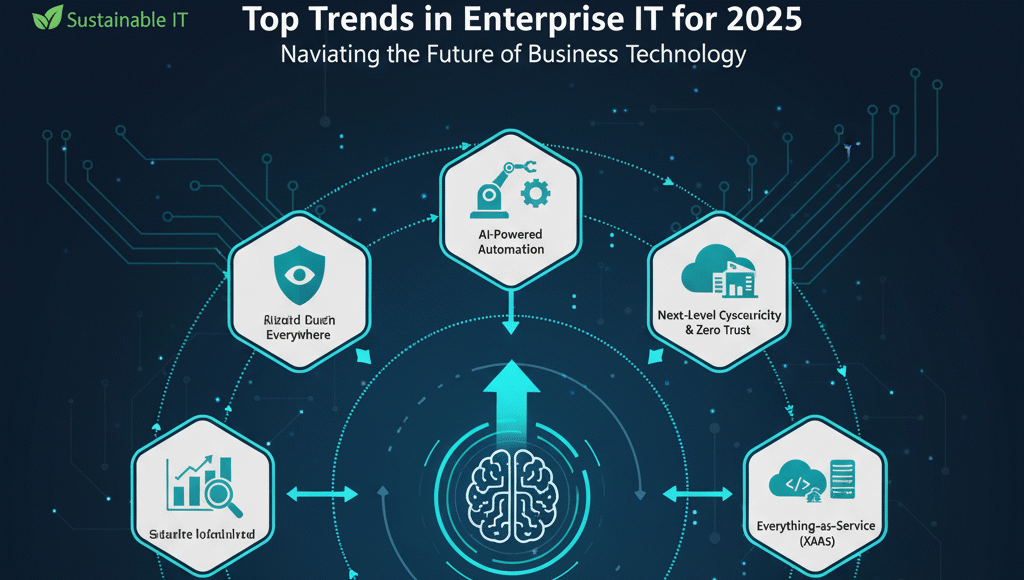
As businesses embrace digital transformation at unprecedented speed, the enterprise IT landscape continues to evolve. In 2025, several pivotal trends are redefining how organizations manage technology, foster innovation, and achieve strategic goals. Here’s what forward-thinking leaders should keep on their radar:
1. AI-Powered Automation Everywhere
Artificial intelligence is no longer an isolated initiative—it’s embedded across workflows, powering process automation, predictive analytics, and decision support. From intelligent chatbots to automated IT operations (AIOps), AI is set to unlock new efficiencies and transformative results.
2. Next-Level Cybersecurity and Zero Trust Models
With increasing cyber threats, enterprises are adopting Zero Trust architectures, AI-driven threat detection, and continuous monitoring. Data protection, compliance, and proactive risk management have become top priorities to safeguard assets and earn stakeholder trust.
3. Hybrid Cloud and Edge Computing
Businesses are balancing workloads between on-premises, public cloud, and edge environments for greater flexibility, scalability, and real-time performance. Intelligent orchestration across these layers ensures seamless data flow and responsive services.
4. Everything-as-a-Service (XaaS)
Platforms and services—from infrastructure and software to security and analytics—are offered in subscription-based, scalable models. XaaS streamlines IT operations, reduces upfront costs, and accelerates innovation cycles.
5. Smarter Integration with API-First Strategies
Modern enterprise solutions are built API-first, enabling rapid integration, data interoperability, and future-proofing. APIs connect disparate systems, allowing companies to leverage best-of-breed technologies and customize their ecosystems.
6. Sustainable IT and Green Tech
Environmental considerations are driving investment in energy-efficient hardware, optimized workloads, and green data centers. Sustainable IT aligns tech strategy with corporate responsibility, improving long-term business resilience.
7. Inclusive Digital Workplaces
Remote and hybrid work cultures continue to shape enterprise IT, with emphasis on collaborative tools, unified communications, and employee experience platforms. Secure, seamless digital workplaces foster productivity and retention.
8. Advanced Analytics and Data Democratization
With self-service BI tools, real-time dashboards, and data literacy initiatives, organizations are empowering users at every level to harness insights and drive strategic decisions.
Conclusion
Enterprise IT in 2025 is about agility, intelligence, and sustainability. Companies embracing these trends will be well-positioned to lead in a fast-changing market, unlock new growth opportunities, and achieve enduring success.