
Adopting ML in Legacy Systems: Challenges & Rewards
Integrating machine learning (ML) into legacy systems is rapidly gaining momentum as organizations seek to modernize operations and unlock new value from their existing infrastructure. However, the journey isn’t without its obstacles. Understanding both the challenges and the significant rewards of adopting ML in legacy systems helps businesses make informed decisions and maximize impact.
Challenges of Integrating ML in Legacy Systems
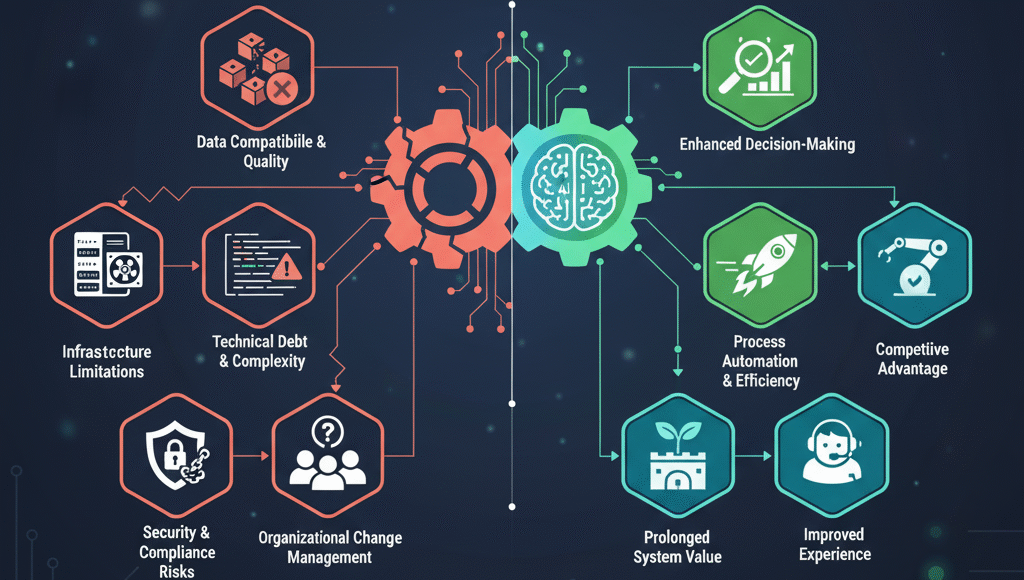
1. Data Compatibility and Quality
Legacy systems were often not designed with big data or analytics in mind. Extracting, cleaning, and formatting data from older platforms can be complicated and time-consuming, sometimes requiring custom connectors or transformation tools.
2. Infrastructure Limitations
Outdated hardware or software may lack the computing power or flexibility to accommodate modern ML workloads. Integration may demand investment in cloud services, hybrid solutions, or hardware upgrades.
3. Technical Debt and Complexity
Legacy codebases are frequently monolithic and may lack proper documentation. Introducing ML modules in such environments can risk instability or require significant code refactoring and careful testing.
4. Organizational Change Management
Employees used to traditional workflows may resist transitioning to AI-assisted processes. Ensuring successful adoption requires staff training, clear communication of benefits, and ongoing support.
5. Security and Compliance Risks
With data sharing and new integrations, maintaining regulatory compliance and robust cybersecurity becomes even more essential.
Rewards of Bringing ML to Legacy Environments
1. Enhanced Decision-Making
ML unlocks advanced analytics, predictive insights, and real-time recommendations, turning legacy data into a powerful asset for strategic decisions.
2. Process Automation and Efficiency
Tasks previously performed manually can be automated, streamlining operations, reducing costs, and freeing staff for higher-level work.
3. Competitive Advantage
Modernizing legacy systems with ML allows businesses to keep pace with or outstrip competitors, adapt to changing markets, and rapidly innovate.
4. Prolonged System Value
ML integration extends the useful life of existing technology investments, deferring costly rip-and-replace scenarios and maximizing ROI.
5. Improved Customer Experience
Intelligent automation and smarter analytics enable faster problem resolution, personalized service, and greater responsiveness to customer needs.
Conclusion
While integrating ML into legacy systems presents technical and organizational challenges, the long-term rewards are substantial. By taking a strategic, phased approach—partnering with experienced experts and investing in staff readiness—organizations can modernize effectively and achieve truly transformative results.